
Salinity Sensor


Online Water Salinity Sensor, 0~70PSU, RS485


Industrial Salinity Sensor, 0~300‰, RS485/4-20mA
A salinity sensor is an instrument used to measure the concentration of dissolved salts in water. By detecting changes in physical properties such as conductivity, dielectric constant, or refractive index, the sensor can obtain the salinity value of the water in real time, making it an indispensable device in marine observation, aquaculture, and environmental monitoring.
Working Principle
The core principle of a salinity sensor is that dissolved salts in water alter the electrical or optical properties of the water. Conductivity sensors calculate salinity by measuring the water's conductivity and combining it with temperature compensation; capacitive sensors use the relationship between the water's dielectric constant and salinity; optical sensors infer salinity from changes in refractive index. Sensors based on different principles have their own advantages and are suitable for different scenarios.
Common Types
Salinity sensors mainly fall into three categories: conductivity, capacitive, and optical. Conductivity sensors are simple in structure and relatively inexpensive, making them the most commonly used type; capacitive sensors offer the advantage of non-contact operation, making them suitable for long-term monitoring; optical sensors offer high accuracy and are often used in research and high-end industrial environments. In addition, there are multifunctional sensors that integrate multiple water quality parameters, simultaneously measuring salinity, temperature, pH, and other indicators.
Main Application Areas
- Marine Observation: Salinity sensors are used to monitor changes in seawater salinity, providing crucial data for studying ocean circulation, climate change, and water structure.
- Aquaculture: In shrimp, crab, and marine fish farming, real-time salinity monitoring reduces stress, improves survival rates, and helps regulate optimal growth environments.
- Agriculture and Irrigation: Monitoring soil or irrigation water salinity helps prevent soil salinization and assists farmers in precise irrigation water management.
- Seawater Desalination and Water Treatment: Salinity sensors monitor the salinity of influent and effluent during desalination processes in real time, ensuring stable equipment operation and assessing desalination effectiveness.
- Industrial Process Control: In industries such as chemical, power, and manufacturing, salinity is used to control solution concentration and water quality parameters, ensuring production quality and equipment safety.
- Environmental Monitoring: Used for monitoring salinity changes in natural water bodies such as rivers, lakes, and groundwater, helping to analyze pollution, estuarine mixing, and ecological changes.
- Scientific Research Experiments: In the laboratory, salinity sensors can be used for water sample analysis, ecological research, and materials experiments, providing accurate data for scientific research.

Marine Environment

Environmental Monitoring
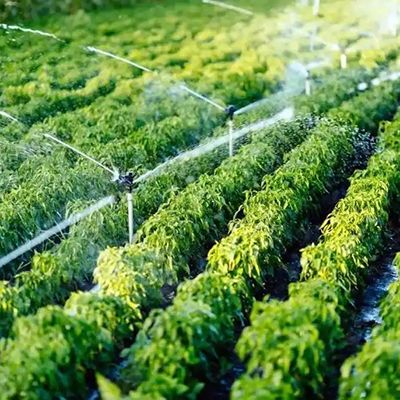
Agriculture and Irrigation
Calibration and Maintenance
To obtain accurate and stable measurements, salinity sensors require regular calibration and maintenance. Common methods include calibration using standard salinity solutions, keeping electrodes or optical components clean, and performing temperature compensation correction. Good maintenance can significantly extend sensor lifespan and maintain data reliability.
Salinity sensors are key equipment in modern water environment and ecological monitoring. From traditional conductivity-based to advanced optical types, salinity monitoring technology has continuously advanced, providing reliable technical support for marine research, aquaculture, agricultural irrigation, and industrial process control. In the future, intelligent and multi-parameter capabilities will enable salinity sensors to play an even greater role in more scenarios.


