
Capacitive Level Sensor


Industrial Capacitance Water Level Sensor, 4-20mA/RS485, 0-900mm
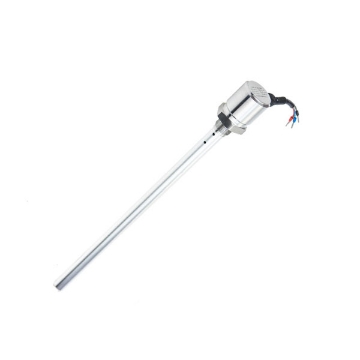
Capacitive Type Level Sensor for Oil Tank, 0-1000mm


Capacitive Fuel Level Sensor for Diesel & Hydraulic Oil, 0-2000mm


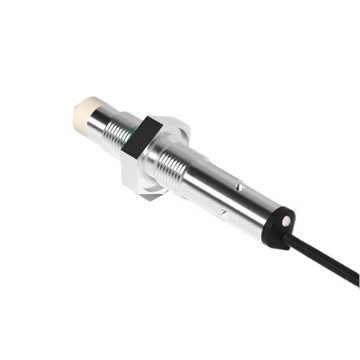
Capacitance Probe Level Sensor for Liquid/Powder

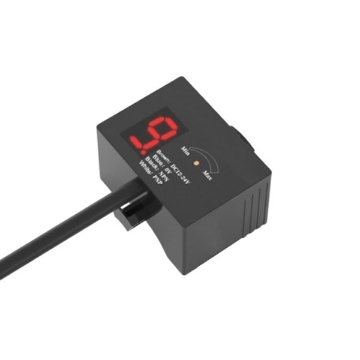

Digital Non Contact Capacitive Liquid Level Sensor for Pipeline


Stainless Steel Capacitance Type Level Transmitter for Hydraulic Oil


Capacitive Water Level Sensor for Pipeline Level Measurement


Capacitive Liquid Level Sensor for Pipeline Level Measurement


RF Capacitance Level Sensor for Corrosive Liquid, 4-20mA/RS485


Digital Capacitance Type Level Transmitter for Solid/Liquid


Frequency Difference Capacitive Liquid Level Switch
A capacitive level sensor is a device that detects changes in material levels by measuring variations in capacitance. Capacitance is an electrical property of a system that describes its ability to store charge. In a typical capacitance type level sensor, a probe and the material being measured form a capacitor. When the material level changes, the dielectric constant between the probe and the sensor surface changes, which alters the capacitance. This change is detected and converted into a measurable electrical signal, allowing precise determination of material levels.
Capacitive sensors are versatile, capable of measuring a wide range of materials, including liquids, powders, granules, slurries, and more. They are suitable for both conductive and non-conductive liquids, making them adaptable to a wide range of industrial requirements.
Working Principle
The basic principle of a capacitive level transmitter is based on changes in capacitance. A simple capacitive sensor consists of two conductive plates: one attached to the sensing electrode and the other serving as a reference or ground. The capacitance between these plates depends on the material between them and its dielectric constant.
- For liquids: When the liquid level rises, the sensor’s probe is increasingly immersed in the liquid, which usually has a higher dielectric constant than air. This increases the capacitance.
- For solids and powders: When the solid level changes, the effective dielectric constant between the probe and the container wall changes, altering the capacitance.
The level sensor’s electronic circuitry measures these changes and converts them into an output signal, such as 4-20mA, 0-10V, or digital protocols like MODBUS, RS485, or RS232. Some capacitive sensors have built-in intelligence for automatic calibration, making installation and maintenance easier.
Applications
Capacitive level sensors are used in numerous industries due to their versatility:
- Water and Wastewater Treatment: These sensors monitor water levels in tanks, reservoirs, and pumping stations. They help prevent overflow, ensure proper chemical dosing, and maintain process efficiency.
- Food and Beverage Industry: Capacitance level sensors are widely used to measure liquid ingredients, powders, and granular materials in food production, beverage bottling, and dairy processes. They maintain hygiene standards by supporting non-contact measurement and using food-grade materials.
- Chemical and Petrochemical Industry: Capacitive level sensors measure levels of acids, oils, solvents, and corrosive chemicals. They provide reliable monitoring in extreme conditions where mechanical sensors may fail.
- Pharmaceutical Industry: In pharmaceutical manufacturing, precise level measurement of liquids, powders, and slurries is crucial for dosage accuracy and quality control.
- Bulk Material Handling: Silos, hoppers, and storage bins for grains, powders, cement, and other bulk solids often use capacitive level sensors for continuous level monitoring, inventory management, and overflow prevention.
- Oil and Gas Industry: Capacitive level sensors monitor fuel, crude oil, and lubricants in storage tanks and pipelines. Their ability to measure non-conductive liquids makes them valuable in hydrocarbon applications.
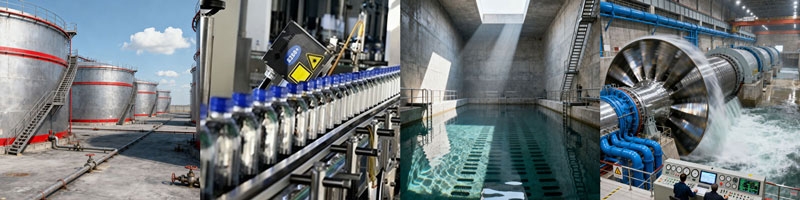
Capacitive level sensors are highly reliable, accurate, and versatile devices for measuring liquid, solid, and slurry levels in a wide range of industrial applications. Their advantages include high sensitivity, no moving parts, compact design, and robust performance under harsh conditions. From water treatment and food processing to chemical, pharmaceutical, and bulk material handling, capacitive level sensors have become an essential tool for modern industrial automation.


