
Turbidity Sensor


Industrial Water Turbidity Sensor, 0~4000 NTU


Water Turbidity Sensor Probe, 0~50/200 to 4000 NTU


Optical Turbidity Sensor, RS485, 0~1000 NTU


Digital Turbidity Sensor for Water, 0~10 NTU, RS485


Online Turbidity Sensor, 0~200/1000/3000 NTU


Industrial High Temperature Turbidity Sensor, 0~3000 NTU
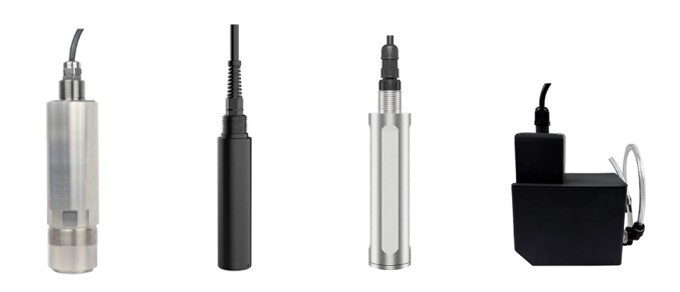
A turbidity sensor is a device that uses optical principles to measure the concentration of suspended particulate matter in water. It calculates turbidity by detecting the scattering, absorption, and transmission of light in water, making it a crucial component of water quality monitoring systems.
Working Principle
The core mechanism of a turbidity sensor is the interaction between light and particulate matter. When a light beam enters the water, suspended particles scatter or weaken the light. The sensor's light source and photodetector capture these changes and convert them into turbidity (NTU) values. Common measurement methods include scattering, transmission, and multi-angle detection, each suitable for different turbidity ranges and environmental conditions.
Common Types
Turbidity sensors are mainly classified into scattering, transmission, and multi-beam types. Scattering sensors are the most widely used and suitable for low to moderate turbidity water bodies; transmission sensors are suitable for industrial wastewater with high turbidity; multi-beam devices detect simultaneously from multiple angles, improving data stability and anti-interference capabilities. In addition, there are portable and online types, used for on-site detection and long-term monitoring, respectively.
Calibration and Maintenance
To maintain long-term stable measurement results, turbidity sensors require regular calibration and maintenance. The optical window needs regular cleaning, as sediment, algae, and scale can affect the light signal. Additionally, it is necessary to avoid bubble interference, which can cause falsely high readings due to scattered light.
With advancements in water quality monitoring technology, turbidity sensors are developing towards intelligence and multifunctionality. IoT communication technology makes it easier to manage remotely and upload data in real time; self-cleaning structure and multi-angle detection improve its reliability in complex environments; at the same time, turbidity sensors are gradually being integrated with sensors such as pH, dissolved oxygen, and temperature to achieve more comprehensive water quality monitoring.


