
Light Curtain


Infrared Light Curtain, 16/20/24/32/36 Beam


Photoelectric Light Curtain, 8/12/16/20/24 Beam


Safety Light Curtain Sensor for Guarding, NPN/PNP Output


Industrial Light Curtain, 8/12/16 to 24 Beam


Through Beam Safety Light Curtain, 6-32 Beam, NPN/PNP


Measuring Light Curtain, RS485/4-20mA/0-10V/NPN/PNP


Waterproof Safety Light Curtain, 4/8/10/12/20 Beam


Light Curtain Sensor, 4/8/10/16/18/22 Beam


Mini Safety Light Curtain, 4/6/12/16/18 Beam


Machine Guarding Light Curtain, 4-52 Beam, NPN/PNP


Diffuse Light Curtain, 4/6/12/22 to 28 Beam, NPN/PNP


Enhanced Safety Light Curtain, 14/16/24/32/34 Beam


Small Light Curtain, 6/8/10/20/30 Beam, NPN/PNP


Level 4 Safety Light Curtain, 16/20/28/30/34 Beam


Machine Safety Light Curtain, Side Light, 4-34 Beam


Standard Light Curtain, 4/14/24 to 32 Beam, NPN/PNP
Light curtain is a non-contact safety sensor that creates an invisible infrared protection barrier around hazardous machine areas. It is suitable for factories, automation lines, press machines, cutting equipment, robotic cells, packaging systems, and other machinery where operator safety is critical. By detecting hands, arms, or objects entering the danger zone, a light curtain can help trigger machine stop signals, reducing the risk of injury, equipment damage, and production accidents while supporting safer and more efficient industrial operation.
Choose by Application
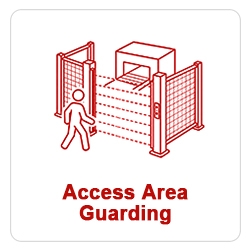
- Machine entrances, loading areas, and access control protection.
- Recommended:
- Through Beam Safety Light Curtain
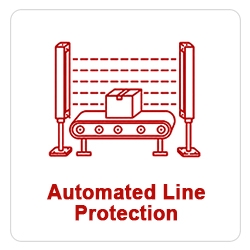
- Conveyor lines, packaging lines, and automated production safety.
- Recommended:
- Machine Safety Light Curtain
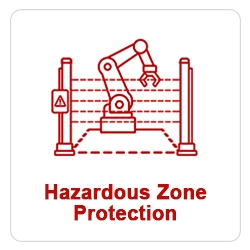
- Robot cells, moving machinery, and hazardous area guarding.
- Recommended:
- Level 4 Safety Light Curtain, 16 to 34 Beam
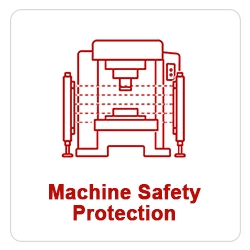
- Press machines, cutting machines, and machine guarding safety.
- Recommended:
- Machine Guarding Light Curtain
Light Curtain FAQ
Q1: What is the best light curtain for machine safety protection?
The best light curtain depends on the machine type, protection height, beam spacing, and required output. For press machines, cutting machines, and automated equipment, choose a safety light curtain with fast response, reliable NPN/PNP output, and suitable protective height.
Q2: How to choose the right beam spacing for a safety light curtain?
Smaller beam spacing is better for finger or hand protection, while larger beam spacing is suitable for body or access area detection. For close machine guarding, 10mm or 20mm beam spacing is commonly used.
Q3: Which light curtain is suitable for automated production lines?
For conveyor lines, packaging lines, and assembly lines, choose a light curtain with stable detection, fast response time, and suitable detection distance. It helps protect operators while allowing materials to move through the line.
Q4: What should I check before buying a safety light curtain?
Check beam spacing, protective height, detection distance, output type, response time, IP rating, and installation method. These factors help ensure the light curtain matches your machine safety and industrial automation requirements.
Products Recommended by Scenario
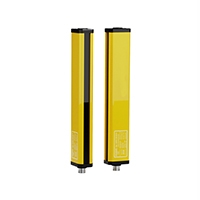 |
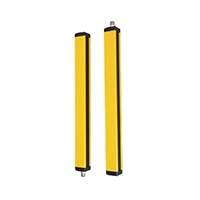 |
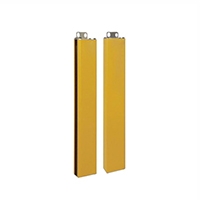 |
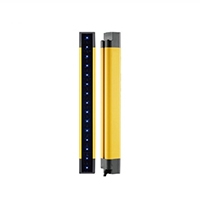 |
|
Machine Guarding Light Curtain |
Through Beam Safety Light Curtain |
Machine Safety Light Curtain |
Level 4 Safety Light Curtain |
|
Suitable for: Machine Safety Protection |
Suitable for: Access Area Guarding |
Suitable for: Automated Line Protection |
Suitable for: Hazardous Zone Protection |
|
4-52 Beams NPN/PNP, NO/NC Aluminum alloy, industrial-grade |
6-32 Beams NPN/PNP Aluminum alloy & ABS |
4-34 Beams NPN/PNP Optical synchronization technology |
10-34 Beams NPN/PNP, NO/NC Anti-interference circuit design |
Liquid Level Sensor Comparison Table
|
Type |
|||
|
Advantages |
Wide beam range, flexible output |
Side light design, fast response |
Higher safety level, fast detection |
|
Limitations |
Needs proper alignment and installation space |
More suitable for specific side-light applications |
Higher cost than basic light curtains |
|
Cost Level |
Low to Medium |
Medium |
Medium to High |
|
Output |
NPN/PNP |
NPN/PNP |
NPN/PNP |
|
Typical Applications |
Press machines, cutting machines, machine guarding safety |
Conveyor lines, packaging lines, automated production safety |
Robot cells, moving machinery, hazardous area guarding |
|
View Product |


