
Wind Sensor

3 Cup Anemometer, Wind Speed Sensor for Yacht/Boat


Three Cup Anemometer Sensor for Measuring Wind Speed


3D Ultrasonic Anemometer, Wind Speed and Direction Sensor


Ultrasonic Wind Speed and Direction Sensor, 40m/s


Ultrasonic Anemometer Sensor for Wind Speed, 60m/s


Outdoor Ultrasonic Wind Speed Sensor, 70m/s


Explosion Proof Wind Speed Sensor, 0~30m/s


Accuracy Wind Direction Sensor, 4-20mA/0-5V/RS485, 0~360°


Duct-mounted Wind Speed Sensor, 4-20mA/RS485


Heated Wind Vane Sensor, RS485 Output, 0~359°
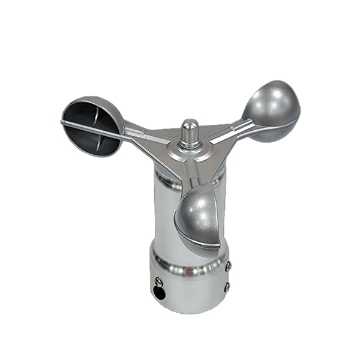


Heated Mechanical Cup Anemometer, Wind Speed Sensor, 0~100m/s


Miniature Ultrasonic Wind Speed and Direction Sensor, 0~45m/s


Mechanical Cup and Vane Wind Speed and Direction Sensor


Crane Anemometer Sensor for Weather Monitoring, 0.3~60m/s


Industrial Ultrasonic Anemometer, Wind Speed Sensor, RS485


Wind Speed Sensor Module, 0~15m/s, I2C Output
What Is a Wind Sensor?
A wind sensor, also known as an anemometer, is a device used to measure wind characteristics, including wind speed and wind direction. By collecting real-time wind data, wind sensors help monitor atmospheric conditions and support applications such as weather observation, environmental monitoring, agriculture, marine systems, and industrial safety.
Depending on the sensing technology, wind sensors can measure airflow through mechanical structures, ultrasonic signals, or other sensing methods. Modern wind sensors are designed for accurate measurement, reliable outdoor operation, and integration with monitoring systems through interfaces such as RS485, Modbus, and analog outputs.
Types of Wind Sensors
Mechanical Wind Sensors
Mechanical wind sensors, commonly including cup anemometers for wind speed and wind vanes for wind direction, are traditional instruments widely used in meteorology and industrial monitoring. They operate through moving components that physically respond to airflow—cups rotate faster as wind speed increases, while vanes align with the wind’s direction. These sensors are cost-effective and easy to understand, but because they rely on mechanical movement, they are susceptible to wear, corrosion, and maintenance issues over long-term use. Regular calibration and servicing are often required to maintain accurate performance.
Ultrasonic Wind Sensors
Ultrasonic wind sensors measure wind speed and direction by transmitting sound waves between transducers and analyzing the time or frequency differences caused by airflow. With no moving parts, they avoid mechanical wear and deliver fast response, high precision, and long-term stability. Their solid-state design allows reliable operation in harsh environments such as high humidity, salt-spray, extreme temperatures, and strong winds. Because they require minimal maintenance and provide consistently accurate data, ultrasonic wind sensors have increasingly become the preferred choice in professional meteorology, marine navigation, environmental monitoring, and modern IoT applications.
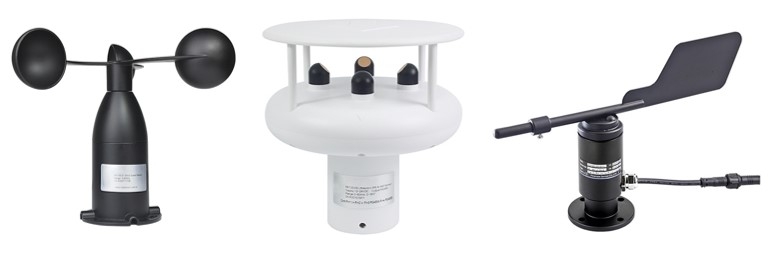
Wind Sensor Comparison
|
Sensor Type |
Measurement Method |
Advantages |
Typical Applications |
|
Mechanical Wind Sensor |
Rotating cups and wind vane |
Cost-effective, simple structure |
Weather stations, agriculture |
|
Ultrasonic Wind Sensor |
Ultrasonic signal measurement |
High accuracy, maintenance-free |
Meteorology, smart monitoring |
Applications of Wind Sensors
Wind sensors are used in various industries where accurate wind information is required.
- Weather Monitoring: Wind sensors provide real-time wind speed and direction data for weather stations, climate observation, and environmental research.
- Agriculture: In agricultural applications, wind monitoring helps improve spraying safety, greenhouse ventilation, and environmental management.
- Marine and Transportation: Wind sensors support safe navigation, port operations, and transportation systems by providing accurate wind condition data.
- Renewable Energy: Wind sensors are important components in wind power systems, helping evaluate wind conditions and optimize turbine operation.
- Industrial Safety: Construction sites, cranes, airports, and industrial facilities use wind sensors to monitor strong winds and improve operational safety.
How to Choose a Wind Sensor?
Selecting the right wind sensor depends on measurement requirements, installation environment, and system integration needs.
|
Selection Factor |
Considerations |
|
Measurement Range |
Choose a sensor according to the expected wind speed range and extreme weather conditions. |
|
Measurement Accuracy |
High-precision applications such as meteorological monitoring require stable and accurate measurement. |
|
Sensor Type |
Mechanical sensors are suitable for general monitoring, while ultrasonic sensors are preferred for high accuracy and low maintenance. |
|
Installation Environment |
Consider outdoor exposure, temperature changes, humidity, dust, and corrosion conditions. |
|
Output Interface |
Select compatible outputs such as RS485, Modbus, 4-20mA, pulse, or analog signals. |
|
Maintenance Requirements |
Sensors without moving parts usually require less maintenance for long-term operation. |
Wind Sensor FAQs
Q1: What is the difference between a wind sensor and an anemometer?
A wind sensor is a general term for devices that measure wind conditions. An anemometer usually refers specifically to a device used for measuring wind speed, although many modern anemometers can also measure wind direction.
Q2: What does a wind sensor measure?
A wind sensor typically measures wind speed and wind direction. Some advanced models can also monitor additional environmental parameters.
Q3: How does an ultrasonic wind sensor work?
An ultrasonic wind sensor measures wind by analyzing the travel time differences of ultrasonic signals passing through moving air. The changes in signal transmission are used to calculate wind speed and direction.
Q4: Which wind sensor is best for outdoor monitoring?
Ultrasonic wind sensors are often preferred for outdoor monitoring because they have no moving parts and provide reliable performance in harsh environments.


