You have no items in your shopping cart.
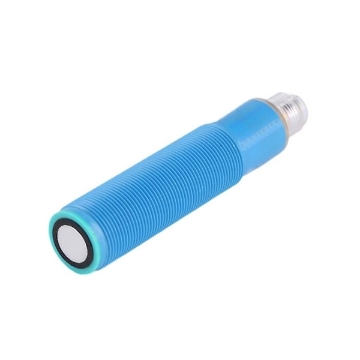
This SUCH compact laser distance sensor combines high precision with robust performance for a wide range of industrial applications. Its compact design allows for easy integration into tight spaces without compromising on functionality. The IP67-rated housing ensures durability against dust and water, while the fully shielded design minimizes interference, making the distance sensor ideal for reliable, long-term operation. Customizable settings give you the flexibility to tailor the sensor to your specific needs.
Body Part
Accessory Part
Note: The sensors are equipped with shielded cables, Q is the switch output.RS-485 output: The black and white lines A and B must not be reversed and A and B cannot be short-circuited with the power line "﹢, -".Analog output: The gray line "Ia" cannot be short-circuited with the power line "﹢, -". There is a small shielded wire, which shall not be in short-circuit connection with the analog output wire, but recommended to be grounded or not grounded.
Laser distance sensors provide a non-contact measurement, which minimizes wear and tear compared to traditional mechanical or physical sensors. They also offer greater accuracy over longer distances and can measure very small or delicate objects without physical contact. Additionally, laser sensors typically have a faster response time, high repeatability, and can function effectively in challenging environments (such as extreme temperatures or low-light conditions), which is ideal for industrial and automation applications.
The compact size of the sensor allows it to fit into smaller or more constrained spaces without compromising its performance. This is especially beneficial in applications where space is at a premium, such as in robotics, manufacturing equipment, or automated systems. The compact design also makes installation and maintenance easier, reducing operational complexity while maintaining high measurement accuracy.
While compact laser distance sensors are highly versatile and accurate, their main limitation may be the measuring range. They may not perform as well at very long distances compared to larger sensors, and the accuracy may degrade if the target surface is reflective or transparent, as this can affect the laser’s ability to return a reliable signal. Additionally, these sensors typically require a clean environment for optimal performance, as dust, fog, or smoke can interfere with the laser beam.