All Categories
    Menu Close
    Find a Sensor A - Z

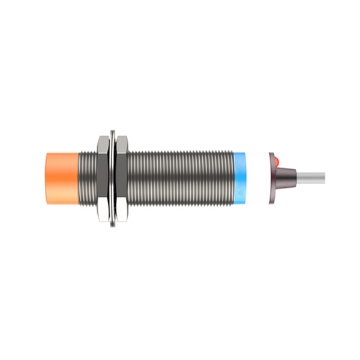
    M24 Capacitive Proximity Sensor, PNP/NPN, 2 Wire

    SKU: SUCH-CPS-24
    $39.34
    ● M24*1.5 thread ● DC type: DC 12-24V, AC type: AC 110-220V ● Red LED indicates sensor status ● Resistant to vibration, dust, water, and oil
    *
    🚚 Free shipping
    🕒 Delivery date: 6-12 days
    🔁 30-day Returns
    Overview

    SUCH M24 miniature capacitive proximity sensor manufacturer direct sale, available with DC 12-24V or AC 110-220V wide voltage range,  NPN/PNP, NO/NC output methods, 8mm or 15mm detection distance, shielded or unshielded type installation, anti-interference ability, suitable for detecting non-metal (or metal), plastic, water, liquid level and powder height.

    Feature

    • The capacitive proximity sensor provides a 15mm sensing distance and uses an intelligent sensing chip for fast response, strong anti-interference performance, and accurate NO/NC metal detection.
    • It features a durable nickel-plated brass M24 threaded housing with good anti-interference capability and long service life.
    • SUCH proximity switch is equipped with an LED indicator that turns on in the normally-open mode and stays off in the normally-closed mode when detecting metal objects.

    Dimension (Unit: mm)

    M24 capacitive proximity sensor dimension

    Wiring Diagram

    m24 capacitive proximity sensor wiring diagram


    Specs
    Installation type Shielded Unshielded
    All the output methods DC type NPN NO NO
    NC NC
    PNP NO NO
    NC NC
    AC type 2 wire NO NO
    NC NC
    Detection range 8mm±10% 15mm±10%
    Setting distance 0-7mm 0-13mm
    Delay distance ≤10% detection range
    Detection object Any dielectric substance
    Standard detection object SPCC iron 50*50*1mm
    Response frequency DC: 0.5kHz, AC: 25Hz
    Supply voltage DC type: DC 12-24V (6-36V), impulse (p-p) 10% below; AC type: AC 110-220V (90-250V) 50/60Hz
    Withstand voltage AC1000V 50/60Hz 1min between charging part and housing
    Voltage influence Inside ±15% rated supply voltage range, at rated supply voltage value, inside ±10% detection distance
    Consumption current N/P type: ≤13mA, D type: ≤0.8mA, A type: ≤1.7mA
    Control output N/P type: ≤300mA, D type: ≤200mA, A type: ≤400mA
    Loop protection N/P/D type: reversal connection protection, surge absorption, load short-circuit protection, A type: surge absorption
    Ambient temperature & humidity Operation temperature/storage temperature: -30~65℃ (no freeze, no dew); Operation humidity/storage humidity: 35~95%RH
    Temperature influence Temperature range -30~65℃, at +23℃, ±15% detection distance; Temperature range -25~60℃, at +23℃, ±10% detection distance
    Insulation impedance ≥50MΩ (DC500 megameter) between charging part and housing
    Material Housing: Nickel plated brass, Detection surface: ABS
    Protection class IP67
    Cable length 1.2m
    Application
    Capacitive proximity sensor for machine tools

    Machine Tools

    Capacitive proximity sensor for textile industry

    Textile Industry

    Capacitive proximity sensor for express delivery industry

    Express Delivery Industry

    FAQ

    In a parallel connection, the sensors operate in an OR configuration, meaning the load is activated when any one of the proximity sensors operates. NPN and PNP types cannot be mixed in this setup. The number of sensors that can be connected depends on their total leakage current—more sensors can be added as long as the leakage current does not affect proper load operation.

    In a series connection, the sensors work in an AND configuration, meaning the load is activated only when all proximity sensors operate simultaneously. The number of sensors that can be used depends on the total saturation voltage of the sensors, and additional sensors can be added as long as the combined voltage drop does not interfere with the power supply voltage.

    When sensors are connected in series, the overall response frequency is affected by the cumulative reset time of each sensor. As more sensors are added, the combined response time increases, which may reduce the speed at which the system can react.

    0.0 0
    Write your own review Close
    *
    *