
1
review(s)
Write your own review
Close
Good draw wire displacement sensor
Used this draw wire displacement sensor on a lifting setup where space was pretty tight. It fit in a lot better than a regular long linear sensor. I had to fiddle with the wire position a bit to get it lined up, but that didn’t take too long. The readings have looked good so far, and I’ve mostly just left it alone since.
Related products

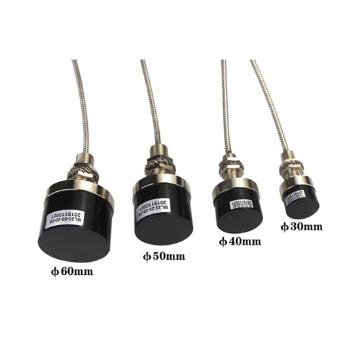

Eddy Current Displacement Sensor, Φ 6-60mm Probe
● 1-50mm measuring range
● Φ 6-60mm probe
● DC 12V/24V/+15V~±18V power supply
● 0-5V/0-10V/4-20mA/RS485 output signal
$579.99


Linear Displacement Sensor, Rod Type, 50mm/75mm to 1250mm
● Measuring range 50~1250mm
● Repeated accuracy 0.01mm
● Maximum operating speed 10m/s
● Output signal DC 0-5V/0-10V/4-20mA
$92.65


High Precision Displacement Sensor, Articulated Type
● Measuring range 75~750mm
● Repeatability 0.01mm
● Maximum operating speed 10m/s
● Number of runs >100x10⁶ times
$147.54


Miniature Linear Displacement Sensor, 10~300mm
● Measuring range 10~300mm
● Repeatability accuracy 0.01mm
● Maximum allowable operating voltage 24VDC
● Maximum operating speed 10m/s
$93.64


Micro Resistive Displacement Sensor, Slider Type, 5~120mm
● Measuring range 5~120mm
● Linearity (±%FS) ±0.1%
● Repeatability 0.01mm
● Normal brush current ≤10μA
$134.68


Micro Rebound Displacement Sensor, 5~100mm
● Measuring range 5~100mm
● Repeatability 0.01mm
● Normal brush current ≤10μA
● Operating temperature range -60~150℃
$140.46
Payment options


