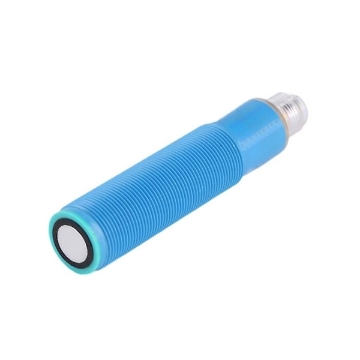
TOF Distance Sensor, 50-2000mm

SKU: SUCH-DTS-200NFC
$126.71
● Output Type: NPN / PNP ● Detection Range: 50-2000mm ● Housing Material: PC ● Beam Type: Point Laser
*
🚚 Free shipping
🕒 Delivery date: 6-12 days
🔁 30-day Returns
Overview

The TOF distance sensor offers precise and stable measurements with a detection range of 50mm to 2000mm, utilizing Time-of-Flight (TOF) technology. Its small, non-diffusing point laser ensures high accuracy across a variety of materials. Featuring both NPN and PNP output types, this SUCH sensor is versatile and suitable for different system configurations. One-touch intelligent calibration allows easy switching between normally open and normally closed states, making the distance sensor ideal for a range of applications requiring both performance and ease of use.

Feature

TOF distance sensor feature

  • 3-5mm Non-diffusing Light Spot: The small light spot laser ensures more precise measurements.
  • Stable Detection, Suitable for Various Objects: Utilizing TOF technology, it provides higher accuracy. The detection range is unaffected by color. The distance sensor can reliably detect a wide range of targets, from high-reflectivity metals to black objects.
  • High-quality Laser Emitter: The measurement range extends from 0.05m to 2m, making the sensor versatile for various applications. Adjustable settings are available according to requirements.
  • One-touch Intelligent Calibration: Easily switch between normally open and normally closed states.
  • Premium Cable Construction: The cable uses high-quality wire cores with excellent conductivity. The matte finish is wear-resistant, and the cable insulation is bend-resistant, waterproof, oil-resistant, and provides outstanding electrical conductivity.
  • Compact Size: It is small and can be installed in various locations.

Dimension (Unit:mm)

TOF distance sensor dimension

Detail

TOF distance sensor detail

Wiring Instruction

TOF distance sensor wiring

Specs
Output Type NPN PNP
Detection Type TOF-based Diffuse Reflective
Detection Range 50-2000mm
Response Time 1ms / 10ms, switching method via button setting
Response Frequency When response time is set to 1ms, > 200 Hz
Resolution 1mm
Repeat Accuracy < 5mm
Operating Voltage 9-30 VDC
Laser Class Class 2
Beam Type Point Laser
Current Consumption < 80 mA
Operation Mode NO/NC switchable, switching method via button setting
Indicators Power Indicator (Green) / Operation Indicator (Orange) / Error Indicator (Red)
Protection Circuits Reverse Polarity Protection / Output Short-circuit Protection / Output Reverse Polarity Protection / Output Overload Protection
EMC Protection ESD Protection / EFT Protection / Surge Protection
Protection Rating IP64
Operating Temperature -20 to 55°C (No Freezing)
Operating Humidity 35-85% RH (No Condensation)
Insulation Resistance > 20 MΩ (DC 500V Megger)
Withstand Voltage AC 1000 V 50/60 Hz for 1 min
Vibration Resistance 10-55 Hz, vibration amplitude 1.5 mm, each direction (X, Y, Z) for 2 hours
Shock Resistance 1000 m/s², Each Direction (X, Y, Z) for 6 Times
Housing Material PC (Polycarbonate)
Lens Material PMMA
Cable Material 0.2mm 4-core PVC Cable
Wiring Method Lead-out Type (Standard Cable Length 2 m)
Weight 44g
Application
Industrial automation

Industrial Automation

Packaging equipment

Packaging Equipment

Robotics

Robotics

FAQ

A TOF (Time-of-Flight) distance sensor is a device that measures distance by calculating the time it takes for a light pulse to travel to an object and return. By emitting a light signal and recording the time it takes for the signal to bounce back, the sensor can determine how far away the object is. It is commonly used for precise measurements in robotics, automation, and other distance-based applications.

The sensor works by sending out a light pulse (usually infrared or laser light) towards an object. When the pulse hits the object, it reflects back to the sensor. The sensor measures the time it took for the pulse to travel to the object and back. Using this time (the "time-of-flight") and the known speed of light, the sensor calculates the distance to the object.

If the sensor detects an object outside its specified detection range, it may either provide an inaccurate reading or fail to detect the object entirely. The sensor will likely signal an error or indicate that the object is out of range. To ensure accurate measurement, it's important to keep objects within the sensor's specified detection limits.

0.0 0
Write your own review Close
*
*