All Categories
    Menu Close
    Find a Sensor A - Z

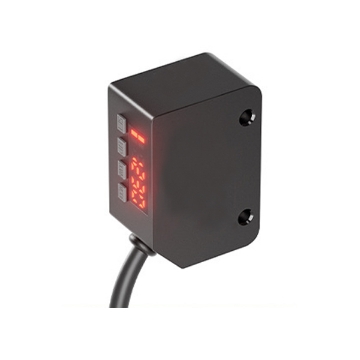
    Long Distance Photoelectric Sensor, 30-2000mm

    SKU: SUCH-PHOS-BG3010
    $122.19
    ● 30-2000mm adjustable ● NPN/PNP output mode ● 3mm spot size ● 650nm red light
    *
    🚚 Free shipping
    🕒 Delivery date: 6-12 days
    🔁 30-day Returns
    Overview

    Long distance photoelectric sensor for demanding industrial environments, featuring a 650nm red laser light source and high-sensitivity detection structure. A precise 3mm spot ensures stable detection of even the smallest targets. NPN/PNP universal output supports seamless integration with various automation equipment, including PLCs, automatic doors, sorting systems, and robotic platforms.

    Feature

    • Long distance photoelectric sensors with background suppression function, detection distance unaffected by background color, DC four-wire NO/NC switching, adjustable detection distance 30-2000mm.
    • With a response speed as fast as 2ms and repeatability accuracy below 5%, this sensor meets high-speed detection and positioning requirements.
    • It supports both NPN/PNP outputs, short-circuit and overload protection, and offers exceptional anti-interference performance against electromagnetic interference, servo motor interference, walkie-talkie interference, and inverter interference.

    Dimension (unit: mm)

    Long distance photoelectric sensor dimension

    Detail

    Long distance photoelectric sensor detail

    Wiring Diagram

    Long distance photoelectric sensor wiring diagram

    Output Wiring Diagram

    Long distance photoelectric sensor output wiring diagram

    Specs
    Detection Distance 30–2000mm (adjustable)
    Standard Target 100 × 100mm white cardboard
    Light Source 650nm red light
    Spot Size Approx. 3mm (standard)
    Output Model NPN/PNP
    Indicator LED Orange LED / green LED
    Operating Voltage 12–24V DC
    No-Load Current <15mA
    Max Load Current 150mA
    Leakage Current <0.01mA
    Voltage Drop <1.5V
    Switching Frequency 100Hz
    Response Time 2ms
    Hysteresis <10% (Sr)
    Repeat Accuracy <5% (Sr)
    Protection Rating IP65
    Operating Temperature 0°C to +55°C
    Temperature Drift <10% (Sr)
    Short-Circuit Protection Yes
    Overload Protection 200mA
    Cable φ3.8mm, 2m PVC cable, 4 × 0.15mm²
    Product Size 47*21*32mm
    Housing Material PC
    Weight Approx. 58g
    Certifications CE, RoHS
    Application
    Long distance photo sensor for production line

    Production Line

    Long distance photo sensor for stacker crane

    Stacker Crane

    Long distance photoelectric sensor for access control equipment

    Access Control Equipment

    FAQ

    Long-distance photoelectric sensors are industrial sensors that utilize optical transmission and reception principles to detect objects at extended ranges. Compared to conventional photoelectric switches, they employ higher-power light sources, more precise optical lens structures, and optimized signal processing algorithms to achieve stable detection capabilities spanning several meters to tens of meters. Based on operating modes, long-range photoelectric sensors include through-beam, diffuse-reflective, and background suppression types.

    The core purpose of using long-distance photoelectric sensors is to ensure reliable target detection and position feedback over extended distances or in harsh environments. For applications like large conveyor lines, warehouse logistics equipment, elevators, access control systems, and outdoor vehicle detection, the required detection range often exceeds the capabilities of standard photoelectric switches. Long-distance photoelectric sensors can achieve stable sensing from 5 meters, 10 meters, or even over 30 meters, thereby enhancing system layout flexibility.

    When deploying long-distance photoelectric sensors, precise alignment of the optical axis is critical. Greater distances demand higher beam consistency, and installation deviations can cause detection instability. Regularly clean the lens area to prevent dust accumulation that could reduce sensing distance. Additionally, ensure no obstructions exist between the sensor and target, and select the appropriate output type (NPN/PNP) based on the load requirements.

    0.0 0
    Write your own review Close
    *
    *