All Categories
    Menu Close
    Find a Sensor A - Z

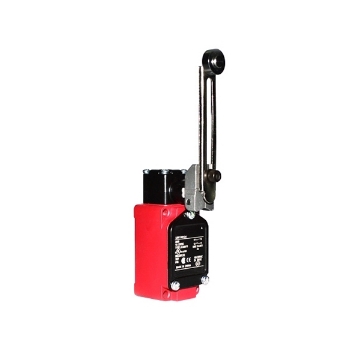
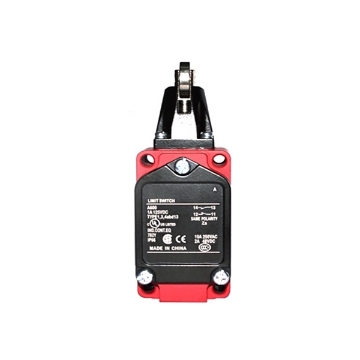
    High Temperature Plunger Type Limit Switch, 1NO+1NC

    SKU: SUCH-LMS-XWKE
    $148.72
    ● Rated voltage 220VAC ● Rated current 5A ● Temperature -10~+350℃ ● Contact type 1NO+1NC
    *
    🚚 Free shipping
    šŸ•’ Delivery date: 6-12 days
    šŸ” 30-day Returns
    Overview

    High temperature top plunger limit switch is available in two types: a sealed ball plunger and a sealed standard plunger without ball. The plunger features an automatic reset function. SUCH plunger type limit switch is equipped with a fully enclosed 1NO + 1NC contact structure made from high temperature resistant casting materials. It can operate reliably in temperatures up to 350ā„ƒ (622℉) and in high-humidity environments up to 95%RH. The default rated current and voltage is 5A/220VAC, with customizable options available such as 10A/120VAC and 2A/48VDC to meet different application requirements.

    Feature

    • Available in two top plunger designs: a sealed ball plunger and a sealed standard plunger to meet different application needs.
    • Built with high temperature resistant materials and a fully enclosed structure for reliable operation in harsh environments.
    • Features an automatic reset plunger and durable contact design to ensure stable and long-lasting performance.

    Dimension (Unit: mm)

    Plunger type limit switch dimension

    Note: In the diagram, OP means operation position, at which the external force is applied to the drive lever to make the movable contact just operating from the state of the free position. PT means pretravel, the distance the drive rod moves from the free position to the operation position. The total travel position TTP is approx 5.8mm.

    Specs
    Model SUCH-XWKE SUCH-XWKF
    Weight 258g
    Shape of Top Plunger * Top plunger without ball Top ball plunger
    Rated Voltage 220VAC (Customizable rated voltage is shown in the reference table below.)
    Rated Current 5A (Customizable rated current is shown in the reference table below.)
    Contact Type 1NO+1NC (NC pin: 1 & 2, NO pin: 3 & 4)
    Operating Speed 1mm/s~2m/s
    Operating Frequency Machinery: 120 times/minute
    Electric: 30 times/minute
    Contact Resistance <15MΩ, initial stage
    Insulation Resistance ļ¼ž100MĪ© (<500VDC)
    Withstand Voltage Between no-connection terminals: 1000VAC, 50/60Hz lasts 1 minute
    Between the terminal and the contact: 2000VAC, 50/60Hz lasts 1 minute
    Between terminal and no-load current metal: 2200VAC, 50/60Hz lasts 1 minute
    Vibration Misoperation endurance: 10~55Hz, 1.5mm, double-amplitude
    Impact Mechanical endurance: ļ¼ž1000m/s2Ā (ļ¼ž100G)
    Misoperation endurance: ļ¼ž300m/s2Ā (ļ¼ž30G)
    Shell Material Cast aluminum alloy
    Temperature -10~+350ā„ƒ (14~622℉)
    Humidity <95%RH
    Working Life Machinery: ļ¼ž15million times
    Electric: ļ¼ž0.5million times
    Protection Class IP66


    Reference table for customizable rated voltage and rated current

    Rated voltage Rated current (A)
    Non-inductive load Inductive load
    Resistive load Lamp load Inductive load Motor load
    NC NO NC NO NC NO NC NO
    125VAC 10 3 1.5 10 5 2
    250VAC 5 2 1 5 3 1
    480VAC 3 1.5 0.8 3 1.5 0.8
    600VAC 1 1 0.5 1.5 1 0.5
    8VDC 10 6 3 10 6
    14VDC 10 6 3 10 6
    30VDC 6 4 3 6 4
    125VDC 0.8 0.2 0.2 0.8 0.2
    250VDC 0.4 0.1 0.1 0.4 0.1

    Note:

    1. Power factor of inductive load is above 0.4 (AC). The time constant is below 7ms (DC).
    2. The inrush current of lamp load is 10 times that of steady state current, and the inrush current of motor load is 6 times that of steady state current.
    Application
    Conveying system

    Conveying System

    Automation equipment

    Automation Equipment

    Industrial equipment

    Industrial Equipment

    FAQ
    āÆ

    If the stroke is set too close to the operating or return position, contact instability may occur; setting it at the total travel position may damage the actuator or internal switch due to inertia.

    āÆ

    Extremely slow speeds can cause unstable contact switching, while very fast speeds or excessive frequency may damage the switch or prevent contacts from switching properly.

    āÆ

    Excessive force may damage the drive rod or affect its movement, so the stroke should always be set within the recommended range for the specific model.

    0.0 0
    Write your own review Close
    *
    *