
0
review(s)
Write your own review
Close
Related products


Pyranometer Solar Radiation Sensor, RS485/4-20mA
● 280-3000 nm spectral range
● 0-2000 W/m² measurement range
● Power supply12-24 VDC
● Output 0-20 mV, 4-20 mA, RS485
$723.99
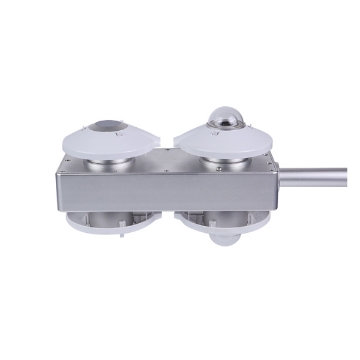

Four-Component Radiation Sensor, 400-50000nm
● 285-3000 nm total radiation spectral response
● 400-50000 nm terrestrial radiation spectral response
● 0-20 mV signal output
● -40°C to +70°C operating temperature
$8,970.99


Net Radiation Sensor for Weather Station, -2000 ~ +2000 W/m2
● 3000-100000 nm longwave radiation spectral range
● 300-3000 nm shortwave radiation spectral range
● -2000 to +2000 W/m² signal range
● -20 to +20 mV output signal
$1,809.99


Albedo Radiation Sensor, 285-3000nm
● 285-3000 nm spectral range
● RS485 signal output
● -40°C to +85°C operating temperature
● IP67 protection level
$649.99


Solar Radiation Sensor, 0-2000 W/m2
● Output interface 0-2V/4-20mA/RS485/SDI-12
● PYR range 0-2000 W/m², accuracy 5%, resolution 1 W/m²
● 400-1100 nm spectral range
● -40°C ~ +85°C operating temperature
$286.99


PAR Sensor, RS485/4-20mA/0-2V/0-5V/0-10V
● Measurement range 0-2500 μmol/m²·s
● 400-700 nm spectral range
● 0-2V/0-5V/0-10V/4-20 mA output signal
● -30°C to +75°C operating temperature
$149.88
Payment options


