
Optical
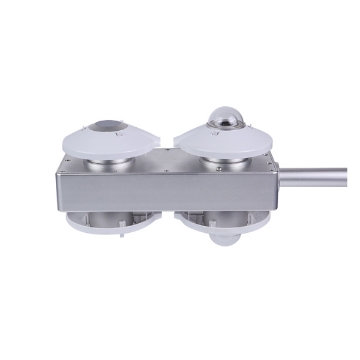

Four-Component Radiation Sensor, 400-50000nm
● 285-3000 nm total radiation spectral response
● 400-50000 nm terrestrial radiation spectral response
● 0-20 mV signal output
● -40°C to +70°C operating temperature
$8,970.99


Mini Diffuse Photoelectric Sensor, 5-30mm, NPN/PNP
● 5-30mm detection distance
● NPN/PNP, NO/NCoutput mode
● Diffuse reflection type
● Red 650nm
$82.06


Mini Safety Light Curtain, 4/6/12/16/18 Beam
● Mini safety light curtain for compact machine guarding
● Fast ≤10ms response supports operator protection
● 4–18 beam options with 20mm optical axis spacing
● Aluminum alloy body fits tight automation spaces
$112.09


Photoelectric Color Sensor, Diffuse Reflection, 10mm±3mm
● Signal mode: NPN/ PNP
● Type: Diffuse reflection
● Detection range: 10mm±3mm
● Spot size: 1×6mm (Set Distance: 10mm)
$284.26


Side-Sensing Rectangular Fiber Optic Sensor
● Diffuse reflective detection type
● Lateral induction sensing position
● Detection range 15-120mm
● Min. bend radius R25
$138.99

Cylindrical Photoelectric Sensor, 5-400mm, NPN/PNP
● 5-400mm detection distance
● NPN/PNP output mode
● Using white matte paper
● Red LED 650nm
$75.82


Digital Color Sensor, 30~70mm/ 150~500mm, RS485 Output
● Output mode: I/O, RS485
● Light source: White LED
● Detection range: 30–70mm, 70–150mm, 150–500mm
● Timer: OFF/ON·Delay/OFF-Delay/Single Delay
$346.13


Machine Guarding Light Curtain, 4-52 Beam, NPN/PNP
● Non-contact protection for machine guarding
● 4-52 beams, 20/40mm optical axis spacing
● NPN/PNP output for industrial control systems
● Aluminum housing with short-circuit protection
$121.85


Net Radiation Sensor for Weather Station, -2000 ~ +2000 W/m2
● 3000-100000 nm longwave radiation spectral range
● 300-3000 nm shortwave radiation spectral range
● -2000 to +2000 W/m² signal range
● -20 to +20 mV output signal
$1,809.99


Top-Sensing Rectangular Fiber Optic Sensor
● Diffuse reflective detection type
● Top induction sensing position
● -55℃~70℃ working temperature
● 120mm inspection distance
$141.98


Albedo Radiation Sensor, 285-3000nm
● 285-3000 nm spectral range
● RS485 signal output
● -40°C to +85°C operating temperature
● IP67 protection level
$649.99


Diffuse Light Curtain, 4/6/12/22 to 28 Beam, NPN/PNP
● One-side installation saves space and setup time
● 4–28 beams with 0–2m diffuse detection range
● NPN/PNP output works with PLC and machine control
● Durable aluminum body with electrical protection
$113.09


LED Color Sensor, NPN/PNP, 8-25mm
● Output mode: NPN/PNP output
● Light source: Tri-color LED
● Detection range: 8-25mm
● Detection method: C, C1, MARK
$195.44


Photoelectric Switch Sensor, 0-40cm, NPN/PNP, NO/NC
● 0-40cm detection distance
● NPN/PNP, NO/NC
● Diffuse reflection type
● Infrared LED (invisible light)
$94.74


RS485 Light Sensor, Aluminum Alloy/Nylon Material
● 0-65,535 lux measurement range
● RS485/DC 4-20 mA/DC 0-10V output interface
● Nylon/aluminum alloy housing material
● DC 5-24 V/DC 12-24V power supply
$85.99


Side-Sensing Through-Beam Fiber Optic Sensor
● Detection rang10/15/20mm
● Through beam detection type
● Sensing position side sensing
● Inspection distance 500mm
$143.89


Enhanced Safety Light Curtain, 14/16/24/32/34 Beam
● 10/20/40mm beam spacing, 4–34 beams optional
● Fast response light curtain for moving parts
● NPN/PNP output supports PLC safety control
● IP65 design with self-test and Anti-interference
$193.38


Fiber Optic Probe, U-Type Through-Beam
● Single-point through-beam measurement method
● Effective detection distance 12mm
● Power supply voltage 24V
● Protection class IP67
$82.95


Laser Color Sensor with Reflective/Through Beam, NPN
● Output mode: NPN
● Detection method: Reflective/through beam
● Detection range: 2-50mm, 1500mm
● Spot size: Φ4mm, Φ3.5mm, Φ7mm
$184.26


Sunshine Duration Sensor, 0-24h
● 0-24 h measuring range with 0.1 h resolution
● ±2% accuracy with stable digital correction
● Multiple outputs 4–20mA/RS485/0-2V/0-5V/0-10V
● Calibrated under real sunlight for reliable measurement
$159.66
Optical sensors are sensors that utilize the properties of light to detect and measure changes in objects or the environment. It converts optical signals into electrical signals by sensing the intensity, color, wavelength, reflection, refraction and other characteristics of light to achieve identification, positioning, detection or measurement of the target. Optical sensors have the advantages of non-contact, high sensitivity, fast response and high accuracy.
Types of Optical Sensors
- Color Sensor: Color sensors are based on the principle of RGB or spectral analysis. By capturing the spectral information of light reflected from an object, color sensors are able to accurately identify and distinguish colors.
- Fiber Optic Sensor: Fiber optic sensors transmit light signals from a light source through an optical fiber to a modulator, so that the measured parameter interacts with the light entering the modulation region, resulting in a change in the optical properties of the light (e.g., light intensity, wavelength, frequency, phase, polarization state, etc.). Then, the changed modulation signal source is transmitted to the light detector through optical fiber, and the measured parameter is obtained after demodulation.
- Flame Sensor: Flame sensors can quickly determine the presence of a flame by detecting the infrared, ultraviolet or visible radiation produced by the flame.
- Infrared (IR) Sensor: Infrared sensors utilize infrared radiation emitted or reflected from an object to sense the temperature or location of a target.
- Image Sensor: Image sensors convert optical images into electrical or digital signals and are the core component of digital cameras, surveillance cameras and other devices.
- Light Curtain/Light Curtain Sensor: Light curtain sensors consist of an emitter and a receiver that form one or more light curtains by emitting and receiving infrared light beams. When an object obscures the light curtain, the sensor responds immediately.
- Photoelectric Sensor: Photoelectric sensors include a variety of types such as convective and reflective. They determine the presence, location or state of an object by detecting the presence or absence of light or changes in intensity.
- Radiation Sensor: A radiation sensor is a sensor used to detect and measure electromagnetic radiation. It senses radiant energy in specific wavelength bands such as ultraviolet, visible, infrared, and even X-rays and gamma rays.
- Ultraviolet (UV) Sensor: UV sensors work by sensing the intensity of ultraviolet light.

Features of Optical Sensors
- Non-contact detection: Can realize detection without touching the object, reduce wear and tear, pollution, and prolong the life of the equipment.
- High sensitivity and high precision: Able to detect very small changes, suitable for application scenarios requiring high precision.
- Fast response speed: Responds quickly to changes, suitable for high-speed detection and real-time control systems.
- Wide range of application: Can be used to measure distance, position, color, transparency, light intensity, surface defects, etc., a very wide range of application areas.
- Strong anti-interference ability: Especially some structural package designs good optical sensors in a complex environment can still work stably.
- Small size, easy to integrate: Most optical sensors are small and lightweight, easy to install in a variety of equipment and in narrow spaces.
Applications of Optical Sensors
Optical sensors are widely used in many fields due to their non-contact, high sensitivity, fast response, etc. They have become one of the indispensable core components for intelligence and automation in various industries.
- Industrial automation manufacturing: Object detection and counting for presence/absence detection and automatic counting of products in assembly lines. Accurately sensing the position or offset of mechanical parts to improve automation accuracy. Identify product surface defects, color differences or transparency inconsistencies.
- Transportation: Automatic braking and collision avoidance system detects obstacles ahead through optical sensors for active safety. Traffic flow monitors parameters such as number of vehicles, speed and emissions.
- Security & Smart Home: Sensing human movement through infrared/laser optical sensors in areas such as doors and windows. Automatically senses light intensity or human activity to intelligently turn on lighting.
- Agricultural monitoring: Monitor light intensity and spectrum required for plant growth.
Payment options


