All Categories
    Menu Close
    Find a Sensor A - Z

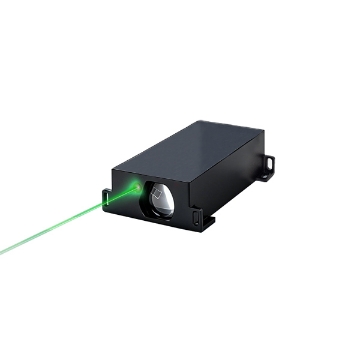
    Micro Laser Distance Sensor, 10m/20m/60m to 100m

    SKU: SUCH-LASER-MSLR
    $196.62
    ● 10m/20m/60/100m ● TTL/RS485/RS232 ● 3/20Hz frequency range ● Laser wavelength 610–690 nm
    *
    *
    🚚 Free shipping
    🕒 Delivery date: 6-12 days
    🔁 30-day Returns
    Overview

    This micro laser distance sensor utilizes phase-based ranging technology and supports a variety of measurement ranges, including 10m, 20m, 60m, and up to 100m. It features a Class II laser, a wavelength of 610–690 nm, and an output power of <1 mW, ensuring safe and stable operation. It is suitable for robot navigation, warehouse positioning, AGV development, and smart device applications, and is particularly well-suited for automated scenarios requiring high-precision and long-range measurement.

    Feature

    10m/20m/60m to 100m micro laser distance sensor feature

    • With 1 mm resolution and measurement frequencies of 3 Hz or 20 Hz, it delivers stable and fast distance measurement.
    • It supports multiple interfaces, including RS485, RS232, and TTL, facilitating system integration and communication expansion.
    • The SUCH micro laser distance sensor offers a wide measurement range of 0.03–100 m, with multiple specifications available from 10m to 100m.
    • Featuring a Class II laser and low-power design, it offers strong anti-interference capabilities and is suitable for measurements in complex environments.

    Dimension (unit: mm)

    10m/20m/60m to 100m micro laser distance sensor dimension

    Working Principle

    Micro laser distance sensor working principle

    The measured distance can be expressed as: 2L = Δφ × c × T / 2π

    In this formula, L represents the measured distance, c is the speed of light in air, T is the period of the modulated signal, and Δφ is the phase difference between the transmitted and received modulated light.

    Phase-based laser sensor offers advantages such as high measurement accuracy, a wide measurement range, and strong resistance to interference, making it widely used in fields such as industry, surveying, and remote sensing.

    PIN Definition

    10m/20m/60m to 100m micro laser- distance sensor pin definition

    Pin Number Name Function Description
    1 GND Ground Module power supply ground
    2 B- RS-485 Input/Output RS-485 device differential signal (DATA-) inverted input/output
    3 A+ RS-485 Input/Output RS-485 device differential signal (DATA+) non-inverted input/output
    4 VCC Power Input Typical module input power requirements: >300mA @ 5V DC
    Specs
    Measurement Range 0.03–100m (Reflectivity: 1.0, Ambient Light Intensity: 3 kLux)
    Sensing Distance 10m/20m/40m/60m/100m
    Measuring Frequency 3/20Hz
    Accuracy ±(3 mm + D × 1/10000)
    Resolution 1mm
    Laser Wavelength λ=610–690 nm
    Laser Power < 1mW
    Measurement Time 0.3–4s
    Laser Class ClASS-II
    Laser Spot Diameter 8mm@10m
    20mm@20m
    40mm@40m
    Reflectivity Range 0.02–1.0
    RS485 Laser off current: <30mA@5V
    Laser on: <50mA@5V
    Continuous measurement mode: <80mA@5V
    5V RS232 Laser off current: <30mA@5V
    Laser on: <55mA@5V
    Continuous measurement mode: <90mA@5V
    5–36V RS232 Laser off current: <30mA@5V
    Laser on: <50mA@5V
    Continuous measurement mode: <80mA@5V
    3.3V TTL Laser off current: <30mA@3.3V
    Laser on: <55mA@3.3V
    Continuous measurement mode: <120mA@3.3V
    5–36V TTL Laser off current: <30mA@5V
    Laser on: <50mA@5V
    Continuous measurement mode: <80mA@5V
    Operating Temperature 0–40℃
    Storage Temperature -25–60°C
    Protection Rating IP54
    Dimensions 68×42.20×17.40mm
    Weight 53g
    Application

    Micro laser distance sensor for autonomous logistics

    Autonomous Logistics

    Micro laser distance sensor for spatial measurement

    Spatial Measurement

    Micro laser distance sensor for intelligent sorting system

    Intelligent Sorting System

    FAQ

    Micro laser distance sensors typically offer ranges of 10 m, 20 m, 60 m, and 100 m, making them suitable for measurement scenarios with varying distance requirements. The nominal distance can be achieved under standard reflectivity conditions; however, the actual measurement distance may be reduced in environments with low reflectivity or strong ambient light.

    Yes, the compact design makes them ideal for integration into embedded systems. Their small size, low power consumption, and TTL interface make them widely applicable in microcontrollers, development boards, and smart terminal devices.

    When selecting a range, you should base your choice on the actual maximum measurement distance and allow for some margin. For example, if the maximum requirement is 15m, we recommend choosing a 20m model to ensure stability and measurement accuracy.

    0.0 0
    Write your own review Close
    *
    *