
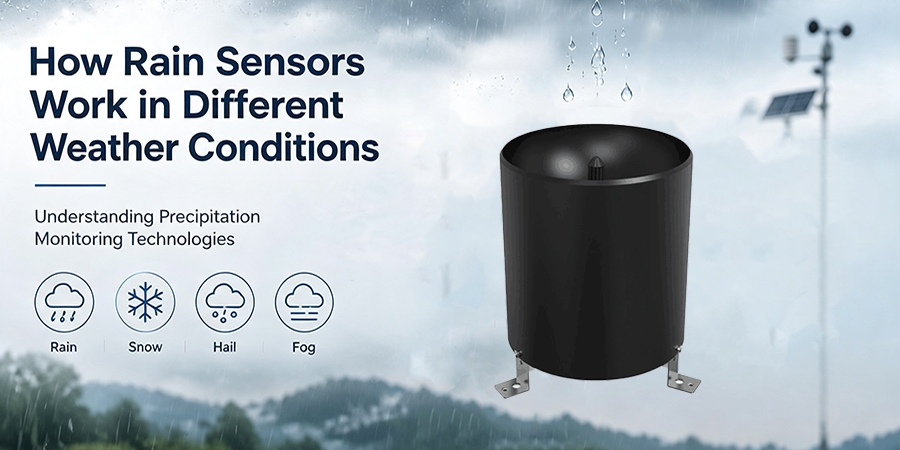
Rain sensors are important components in modern weather monitoring systems. They are widely used in applications such as agriculture, smart cities, transportation, and environmental monitoring. The main purpose of a rain sensor is to detect rainfall or measure precipitation changes. By collecting environmental data, these sensors help monitoring systems understand weather conditions and support automated control and decision-making.
However, weather conditions are complex and constantly changing. Rain, snow, hail, and fog have different physical characteristics, which may affect how precipitation monitoring systems collect and analyze data. Understanding how rain sensors work in different weather conditions helps engineers choose suitable sensing technologies for different applications.
How Do Rain Sensors Detect Rainfall?
Rain sensors use different sensing principles to detect the presence or amount of precipitation. The most common technologies include optical detection, mechanical measurement, impact sensing, and weight measurement.
Optical Rain Sensor
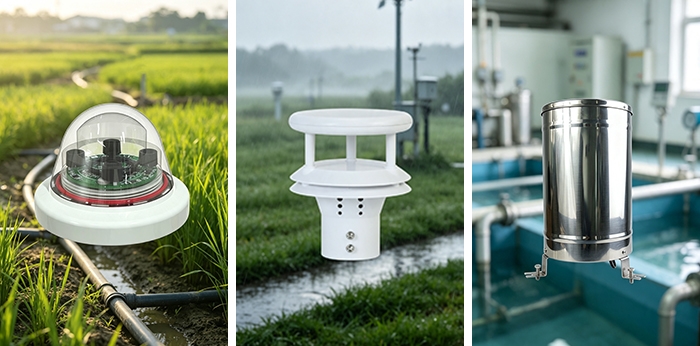
Optical rain sensors detect changes in light transmission and reflection caused by water droplets.
The basic working principle includes:
- A light source sends signals through or onto a sensing surface.
- Water droplets change the way light is transmitted or reflected.
- The sensor detects signal changes and identifies moisture conditions.
Optical sensing technology is commonly used in applications requiring fast response and reliable moisture detection.
Tipping Bucket Rain Sensor
A tipping bucket rain sensor measures rainfall by collecting water and recording the amount accumulated.
The working process:
- Rainwater enters the collection funnel.
- Water fills the tipping bucket.
- When a certain volume is reached, the bucket tips.
- The system calculates rainfall based on tipping frequency.
This technology is widely used in rainfall measurement and weather observation systems.
Piezoelectric Rain Sensor
Piezoelectric rain sensors detect mechanical impacts caused by precipitation hitting a sensing surface.
When raindrops impact the sensor:
- Mechanical vibration is generated.
- Piezoelectric materials convert vibration into electrical signals.
- Signal characteristics can be analyzed for precipitation monitoring.
This technology provides fast response and is suitable for applications requiring real-time environmental monitoring.
Weighing Rain Sensor
Weighing-based precipitation sensors measure accumulated precipitation by calculating the weight of collected material. This measurement method focuses on total precipitation amount and is commonly used in professional weather monitoring applications.
How Different Weather Conditions Affect Precipitation Monitoring?
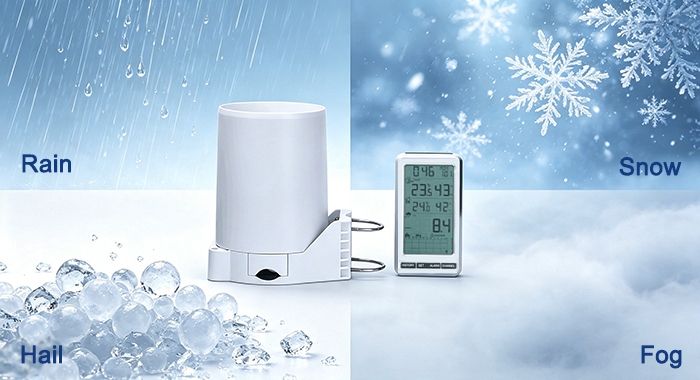
Different weather conditions have different physical characteristics. These differences may influence precipitation measurement methods and monitoring accuracy.
|
Weather Condition |
Characteristics |
Impact on Monitoring |
Common Considerations |
|
Rain |
Liquid water droplets with different sizes and rainfall intensity |
Requires accurate detection of rainfall presence and amount |
Response speed, measurement range, installation environment |
|
Snow |
Solid precipitation with lower density and different falling behavior |
May require specialized measurement methods compared with liquid rainfall |
Temperature conditions, accumulation, calibration |
|
Hail |
Solid ice particles with larger size and stronger impact force |
Produces different impact characteristics compared with raindrops |
Signal analysis, sensor protection, measurement method |
|
Fog |
Tiny water droplets suspended in the air |
Requires monitoring methods related to moisture or visibility changes |
Optical sensing, humidity measurement, environmental conditions |
Comparison of Different Rain Sensor Technologies
|
Sensor Technology |
Working Principle |
Measurement Characteristics |
|
Detects changes in light transmission or reflection |
Rain detection and moisture monitoring |
|
|
Tipping Bucket Rain Sensor |
Measures rainfall through water collection and tipping movement |
Weather stations and rainfall measurement |
|
Analyzes impact vibration signals |
Real-time precipitation monitoring |
|
|
Weighing Rain Sensor |
Calculates precipitation based on accumulated weight |
Professional weather monitoring |
Why Are Multiple Sensors Used in Weather Monitoring Systems?
Modern weather monitoring systems usually combine multiple sensors instead of relying on only one measurement device.
For example:
- Rain sensors monitor precipitation changes.
- Wind sensors measure wind speed and direction.
- Temperature sensors track temperature variations.
- Humidity sensors measure moisture levels.
- Pressure sensors provide atmospheric pressure information.
By combining multiple environmental parameters, monitoring systems can provide more comprehensive weather data.
How to Choose a Rain Sensor?
Choosing the right rain sensor depends on the application requirements and working environment. When selecting a rain sensor, consider the following factors:
- Measurement Requirements
Determine whether the application requires rainfall detection, precipitation measurement, or continuous weather monitoring.
- Sensing Technology
Select a suitable sensing principle based on accuracy, response speed, and application conditions.
- Installation Environment
Consider outdoor factors such as temperature, humidity, dust, and exposure to weather conditions.
- Communication Interface
Choose an appropriate output method, such as analog signal, digital signal, RS485, or Modbus, based on the monitoring system requirements.
Rain sensors play an important role in modern weather and environmental monitoring systems. Different weather conditions, including rain, snow, hail, and fog, have different physical characteristics that affect precipitation monitoring methods. By selecting suitable sensing technologies and combining multiple environmental sensors, monitoring systems can provide more reliable data for applications such as agriculture, smart cities, weather stations, and environmental monitoring.
Understanding how rain sensors work in different weather conditions helps engineers and system designers make better decisions when developing precipitation monitoring systems. SUCH online shop provides rain sensor products based on different sensing technologies for applications including weather monitoring, environmental monitoring, and industrial systems.


