
Power Transducer


1-Phase AC Current Transducer, 0-1A/10A to 20A


3-Phase AC Current Transducer, 0-1A/5A to 20A


DC Current Transducer, Loop/Self-Powered, 0-10A


1-Phase AC Voltage Transducer, 0~120V/300V to 600V


3-Phase AC Voltage Transducer, 0~120V/450V to 600V


DC Voltage Transducer, 0-50V/150V to 600V


Active Power Transducer, 3-Phase 3/4 Wire


Reactive Power Transducer, 3-Phase 3/4 Wire


Active and Reactive Power Transducer, 3-Phase 3/4 Wire


Frequency Transducer, 40-60Hz to 0-100Hz
A power transducer is a device that converts electrical quantities such as current, voltage, active power, reactive power, or frequency into an analog or digital output signal for monitoring, control, and data acquisition. This category includes AC and DC current transducers, AC and DC voltage transducers, active and reactive power transducers, and frequency transducers.
Power Transducer Types
This category includes 10 transducer types, grouped by what they measure: current, voltage, power, and frequency.
|
Category |
Type |
Measures |
Typical Application |
|
Current |
Current on a single-phase AC circuit |
Single-phase load monitoring |
|
|
Current across three-phase AC systems |
Industrial and commercial power distribution |
||
|
Direct current |
Solar arrays, battery storage |
||
|
Voltage |
Voltage on a single-phase AC circuit |
Single-circuit voltage monitoring |
|
|
Voltage across three-phase AC systems |
Distribution panel monitoring |
||
|
DC voltage |
DC bus monitoring, battery systems |
||
|
Power |
Active power, in W |
Energy consumption monitoring |
|
|
Reactive power, in VAR |
Reactive power monitoring |
||
|
Active and reactive power (combined) |
Measures active and reactive power with one transducer |
||
|
Frequency |
Frequency of an AC signal |
Power and generator monitoring |
How to Choose a Power Transducer?
Choosing a power transducer starts with identifying the electrical quantity to be measured and the type of circuit being monitored. The input range, phase and wiring configuration, output signal, and accuracy class should then be matched to the measurement system.
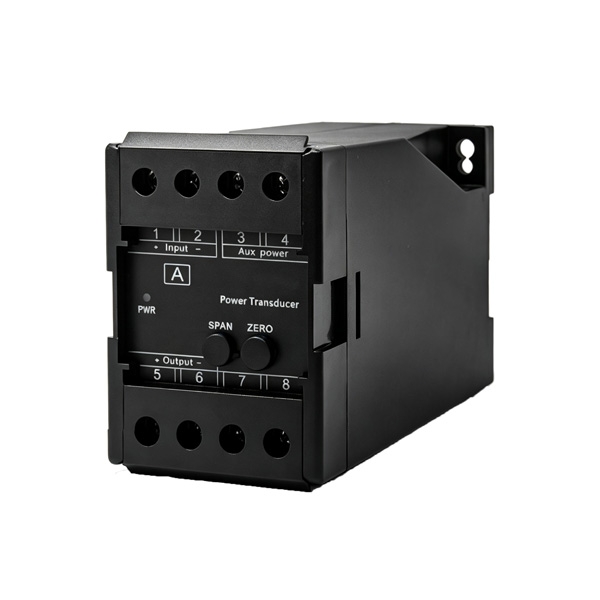
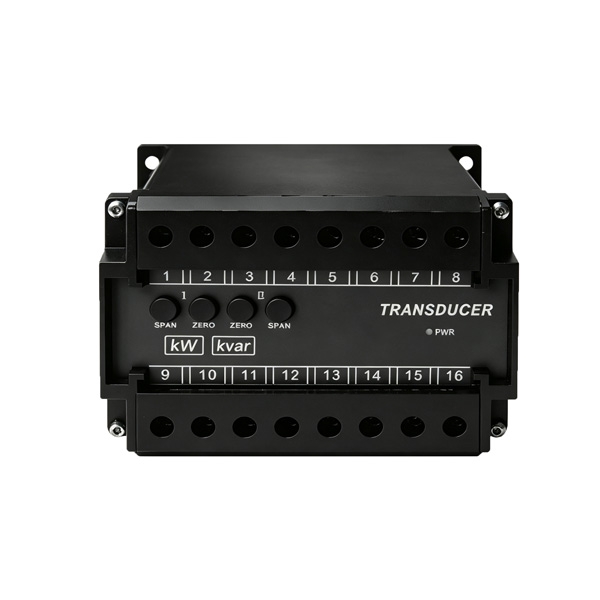
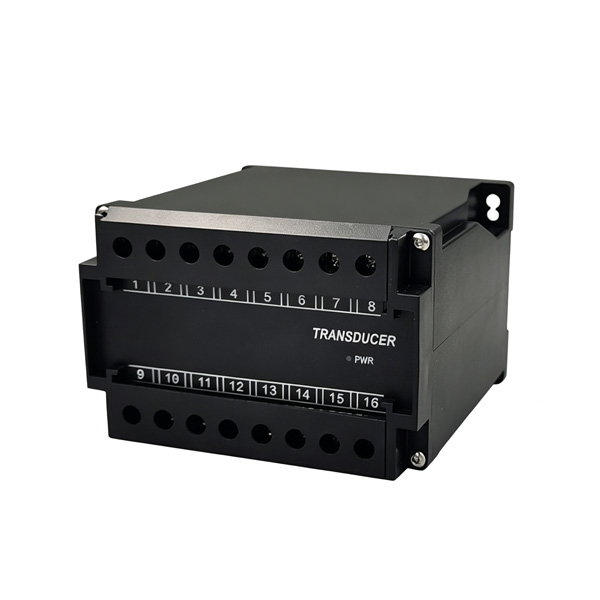
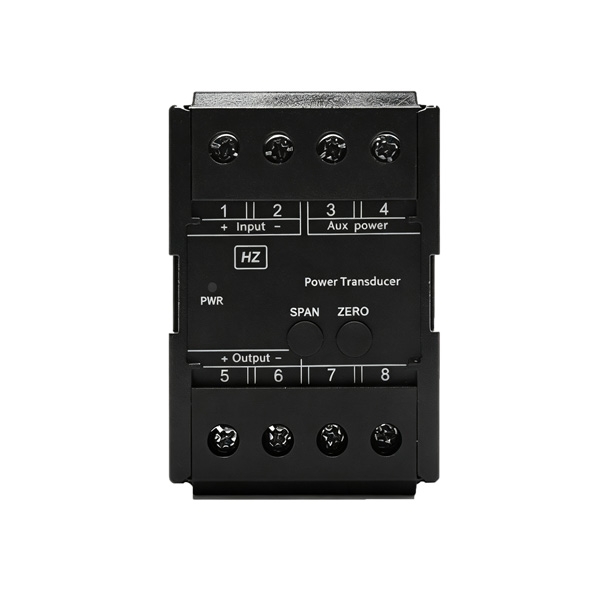
The examples below show different power transducer types used for current, combined power, and frequency measurement.
Step 1: Identify what needs to be measured
Determine whether you need to measure current, voltage, active power, reactive power, or frequency. Some applications require more than one measurement — a combined unit, such as an active and reactive power transducer, can measure both with a single device.
Step 2: Confirm AC or DC
Check whether the circuit is AC or DC. AC and DC transducers are designed for different input types, so the transducer must match the circuit being measured.
Step 3: Check phase and wiring
For AC systems, determine whether the circuit is single-phase or three-phase, and for three-phase systems, whether it is wired as 3-wire or 4-wire. This must match your system's wiring, or the transducer will not read correctly.
Step 4: Match the input range
Identify the actual current or voltage levels in your system. The selected range should cover the actual input value and remain within the specified measurement and overload limits.
Step 5: Select the output signal
Choose an output that matches the input interface of your monitoring or control system — common options are 4-20mA, 0-10V, 0-5V, or digital interfaces such as RS485.
Step 6: Confirm the required accuracy class
Check the accuracy class needed for your application. Higher accuracy may be required where measurement precision is important.
Power Transducer Applications
Power transducers are used across four main types of systems: power distribution, industrial automation, energy management, and commercial buildings.
|
Application |
Measures |
Where Used |
Purpose |
|
Power Distribution |
Current, voltage, and power at feeder and branch circuit levels |
Switchgear and distribution panels |
Electrical system monitoring |
|
Industrial Automation |
Current, voltage, and power in motors and equipment |
PLC, DCS, and SCADA systems |
Process monitoring and control |
|
Energy Management |
Current, voltage, active power, and reactive power |
Energy monitoring systems, solar and battery storage systems |
Energy monitoring and electrical system analysis |
|
Commercial Buildings |
Current, voltage, and power in electrical loads |
Distribution panels and building electrical systems |
Building electrical system monitoring |
Power Transducer FAQs
Q1: What is the difference between a power transducer and a power meter?
A power transducer converts a measured electrical quantity into an analog or digital signal for a control or monitoring system, while a power meter typically displays or records measurement values directly.
Q2: Can a power transducer measure both AC and DC?
Some power transducers are designed for AC measurement, while others are designed for DC measurement. AC and DC measurement functions are model-dependent and should be matched to the electrical signal being monitored.
Q3: Does a power transducer provide electrical isolation?
Many power transducers use isolation between the input, output, and auxiliary power circuits to separate the measured electrical signal from the connected monitoring or control system. The available isolation configuration depends on the model.
Q4: How is a power transducer connected to a monitoring system?
A power transducer is connected according to its output type. Analog models connect their voltage or current output to compatible input channels, while RS485 models connect to a compatible communication interface.
Q5: What power transducer is suitable for energy monitoring?
The suitable type depends on the electrical quantity being monitored. Current and voltage transducers are used for electrical parameter monitoring, while active and reactive power transducers are used when power consumption or reactive power needs to be monitored.


