
Pressure Switch


Adjustable Water Pump Pressure Switch, 0.3-200 Bar, NO/NC


Universal Mechanical Pressure Switch, 0.5-150 PSI, NO/NC/NO+NC


High Hydraulic Pressure Switch, 0.2-400 Bar, 1NO+1NC


Well Tank Pressure Switch for Water Pumps, 1.0-16.0 Bar


HVAC Compressor Pressure Switch, -0.2–32 Bar / 2–45 Bar


Adjustable Boiler Pressure Switch, 0.2-9.0 Bar


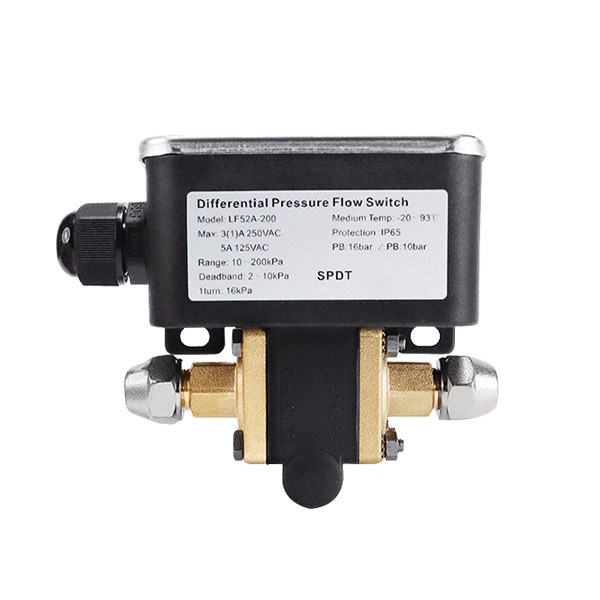
Differential Pressure Switch for Flow Monitoring, 5-400 kPa, SPDT


Digital Pressure Control Switch, 10kPa-100MPa, 4-20mA Output


Electronic Digital Pressure Switch, 0-600 Bar, NPN/PNP/4-20mA


Adjustable Pressure Switch, 0.2–400 Bar, NO/NC


Industrial Mechanical Pressure Switch, 30–200 Bar, NO/NC


Hydraulic Pressure Switch, 100–300 / 200–500 Bar


Digital Pressure Switch, -101 to 0 kPa / 0 to 1.6 MPa
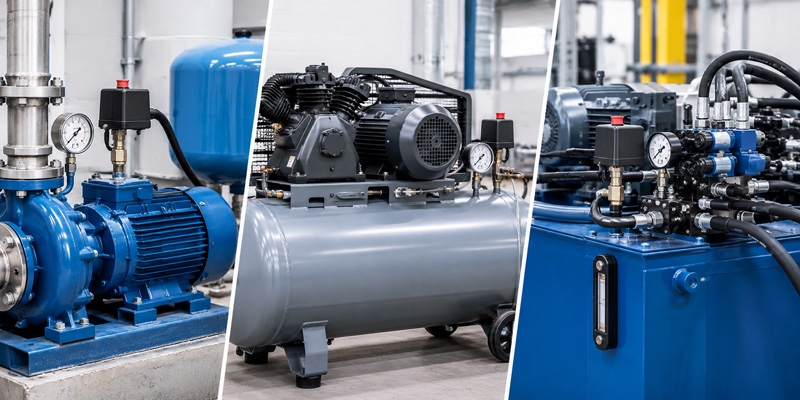
A pressure switch monitors the pressure of a liquid or gas and changes the state of its electrical contacts when the pressure reaches a preset point. It is commonly used for pressure-based control in pumps, air compressors, hydraulic systems, HVAC equipment, and industrial machinery. Common types include mechanical, electronic, digital, and differential pressure switches. When choosing a pressure switch, consider the switching pressure, pressure range, contact configuration, electrical ratings, pressure connection, and compatibility with the working medium.
Pressure Switch Selection Table
Use this pressure switch selection table to find suitable products based on your application, pressure control requirements, and signal needs.
|
Selection Need |
Key Selection Criteria |
Recommended Products |
|
Basic pump start/stop control |
Check cut-in and cut-out pressures, switching differential, and contact ratings for the pump control circuit. |
|
|
General-purpose mechanical switching |
Match the adjustable setpoint range, contact configuration, thread type, and working medium to the equipment requirements. |
|
|
Industrial and hydraulic pressure control |
Verify the required switching point, maximum working pressure, pressure surges, and compatibility with the hydraulic system. |
|
|
HVAC and refrigeration control |
Check the required pressure cut-in and cut-out points, refrigerant compatibility, temperature limits, and reset type. |
|
|
Boiler and steam pressure control |
Verify the switching range, maximum working pressure, temperature limits, and suitability for the boiler or steam system. |
|
|
Differential pressure monitoring |
Select a differential pressure range suitable for the pressure drop across filters, pipes, or other equipment. |
|
|
Digital pressure control with analog feedback |
Check the pressure range, switching outputs, analog signal, supply voltage, and compatibility with the control system. |
|
|
Electronic pressure monitoring and switching |
Verify the measurement range, switching accuracy, electrical output, display requirements, and system interface. |
|
|
Digital vacuum or positive-pressure control |
Confirm whether the application requires vacuum or positive-pressure measurement, and check the corresponding range and output type. |
How to Choose a Pressure Switch
Follow these five steps to choose a pressure switch based on the required switching pressure, switch type, pressure connection, electrical requirements, and operating conditions.
Step 1: Determine the Required Switching Pressure
Identify the pressure at which the switch must turn equipment on or off. For pump systems, determine the required cut-in and cut-out pressures. Choose a pressure switch whose adjustable setpoint range covers the required switching points, and check the switching differential to help prevent frequent cycling.
Step 2: Select the Right Pressure Switch Type
Choose a pressure switch based on the required control function.
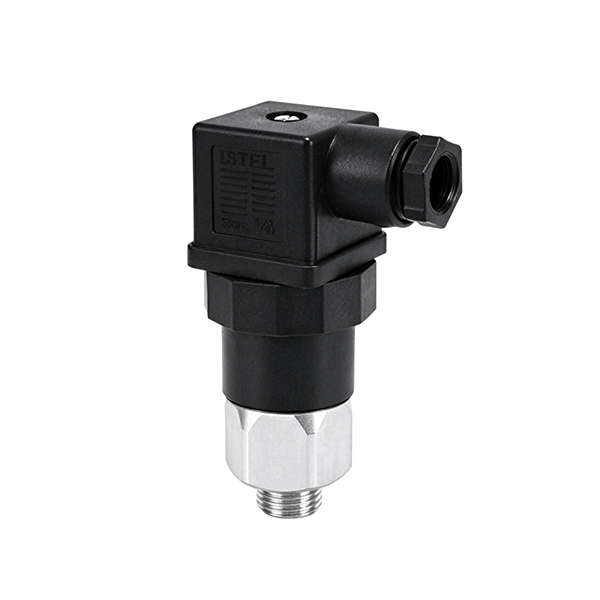
- Mechanical pressure switch: Suitable for basic pressure-triggered on/off control.
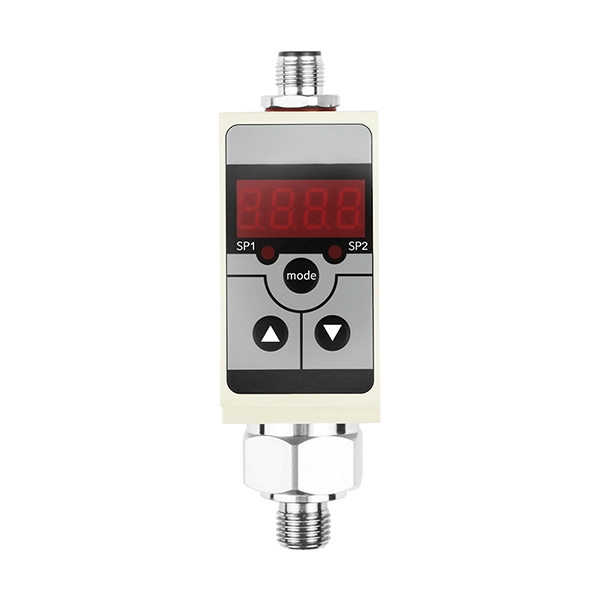
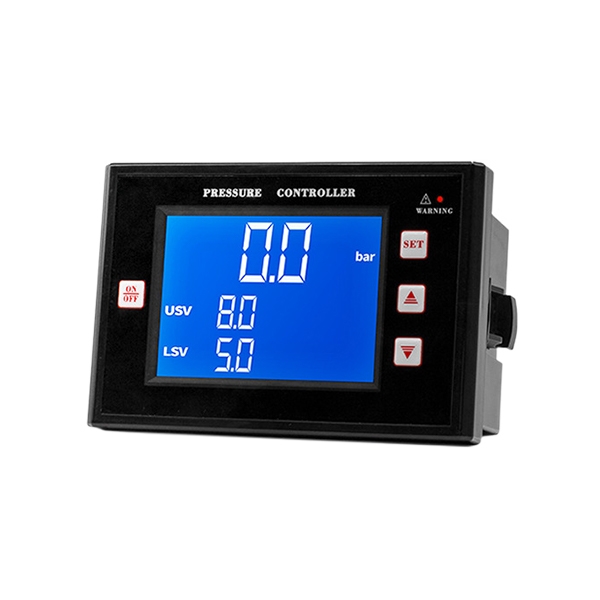
- Electronic or digital pressure switch: Suitable for applications requiring electronic switching, a digital pressure display, or an electrical output signal.
- Differential pressure switch: Used to monitor the pressure difference across filters, pipes, and other equipment.
Step 3: Check the Pressure Connection and Medium Compatibility
Match the pressure port thread type, size, and standard, such as NPT or G thread, to the system connection. Check that the materials in contact with the medium and the seals are compatible with the fluid or gas, such as water, air, oil, or refrigerants. Confirm that the medium temperature is within the switch's rated limits.
Step 4: Match the Electrical Ratings and Output
Check the supply voltage, contact configuration, and current rating against the control circuit and connected load. Common contact configurations include normally open (NO), normally closed (NC), and single-pole double-throw (SPDT). Electronic models may use relay, NPN, PNP, or 4–20 mA outputs, so confirm that the output is compatible with the controller or monitoring system. If a motor or pump exceeds the switch's contact rating, use a suitably rated relay or contactor.
Step 5: Verify Pressure Limits and Installation Conditions
Confirm that the maximum system pressure, including any pressure surges, remains within the switch's rated maximum working pressure. The switching range defines the pressures at which the switch can operate; maximum working pressure defines the pressure it is rated to withstand during operation; proof pressure is a specified test pressure, not a normal operating limit. Also check the operating temperature, ingress protection (IP) rating, vibration, and installation environment.
Pressure Switch FAQ
Q1: What is the difference between NO, NC, and SPDT pressure switches?
NO (normally open) contacts close when the switch is activated, while NC (normally closed) contacts open. An SPDT (single-pole double-throw) switch has a common terminal and can switch between NO and NC contacts. Choose the contact configuration that matches your control circuit.
Q2: What is the difference between mechanical and electronic pressure switches?
Mechanical pressure switches use pressure-driven mechanical movement to operate electrical contacts, making them suitable for basic on/off control. Electronic pressure switches use pressure sensors and electronic circuits to provide switching outputs and may support digital displays or analog signals such as 4–20 mA. The choice depends on the control and monitoring requirements.
Q3: Can a pressure switch directly control a motor or pump?
Yes, if the pressure switch's contact voltage and current ratings are suitable for the motor or pump load, including starting current. If the load exceeds the switch's ratings, use a properly rated relay or contactor. Always check the motor's electrical requirements and the switch's contact ratings before connecting them.


